
The Prettiest Dorset Villages and Towns to Visit
There’s something undeniably magical about Dorset. With its rolling countryside, honey-coloured cottages, winding lanes and Jurassic Coast vistas, it’s...





by Laura Bell / Area Guides
For many UK travellers, a great break is about more than just a nice view. It is about stories, heritage, and places that spark genuine curiosity. According to the Sykes Staycation Index 2025, over a quarter of people now book UK holidays specifically to visit historic attractions. It is no surprise that the Jurassic Coast was ranked #2 on the list of the UK’s most sought after cultural destinations.
This 95 mile stretch of coastline is not just a geological wonder; it is a living museum. This guide is designed to help culture-curious travellers plan a book-ready itinerary, from ancient hill forts to Tudor castles and the pioneering legacy of Mary Anning.
Read our guide to the top things to discover on the Jurassic Coast.
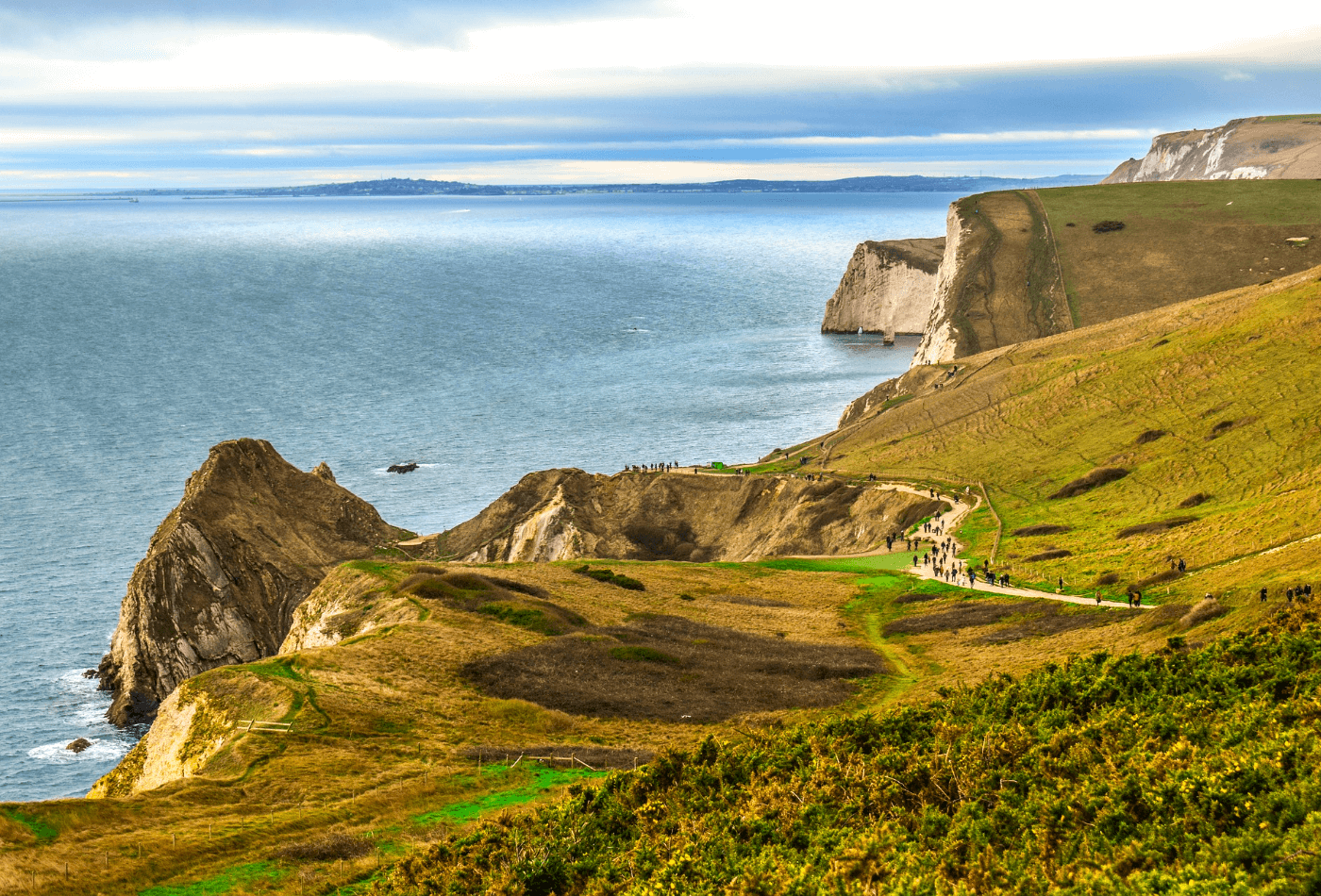
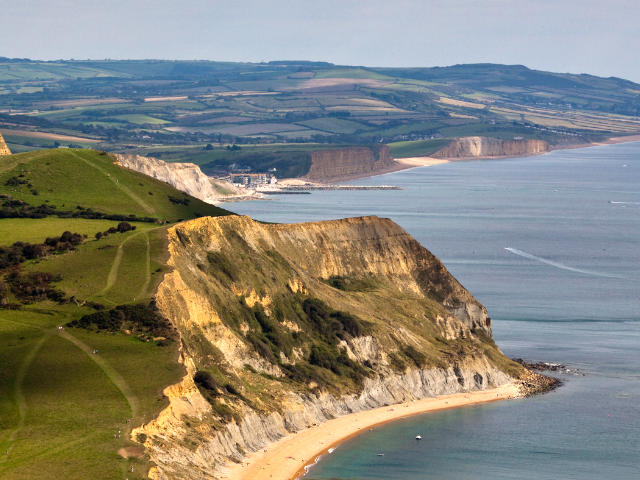
The Jurassic Coast is England’s only natural UNESCO World Heritage Site, awarded this status in 2001 for its global geological significance. Running from Exmouth in East Devon to Studland Bay in Dorset, the cliffs reveal 185 million years of Earth’s history through visible Triassic, Jurassic, and Cretaceous rock layers.
Walking the South West Coast Path here is a journey through time. You will encounter landmarks like Old Harry Rocks and Durdle Door, but you will also find the footprints of the Roman, Saxon, and Victorian people who shaped this land.
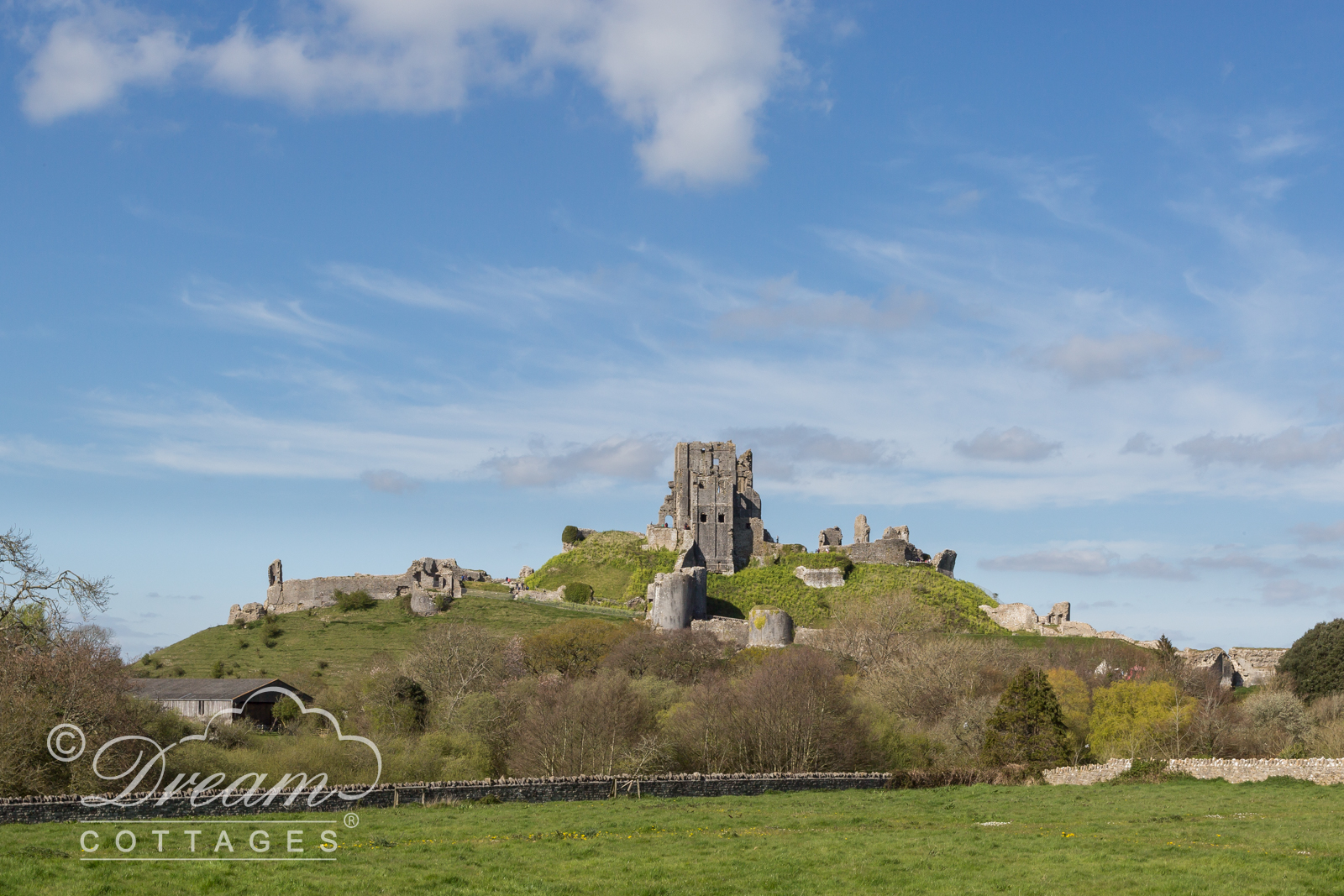
Standing proudly above the Purbeck Hills, Corfe Castle is a jagged silhouette of royal intrigue. Built by William the Conqueror and later betrayed from within during the English Civil War, the ruins are atmospheric and imposing.
Local Expert Tip: To avoid the midday crowds, arrive for “opening bell” or visit in the late afternoon when the sun hits the silver Purbeck stone. If you have time, take the Swanage Railway steam train from the village for the most authentic arrival.
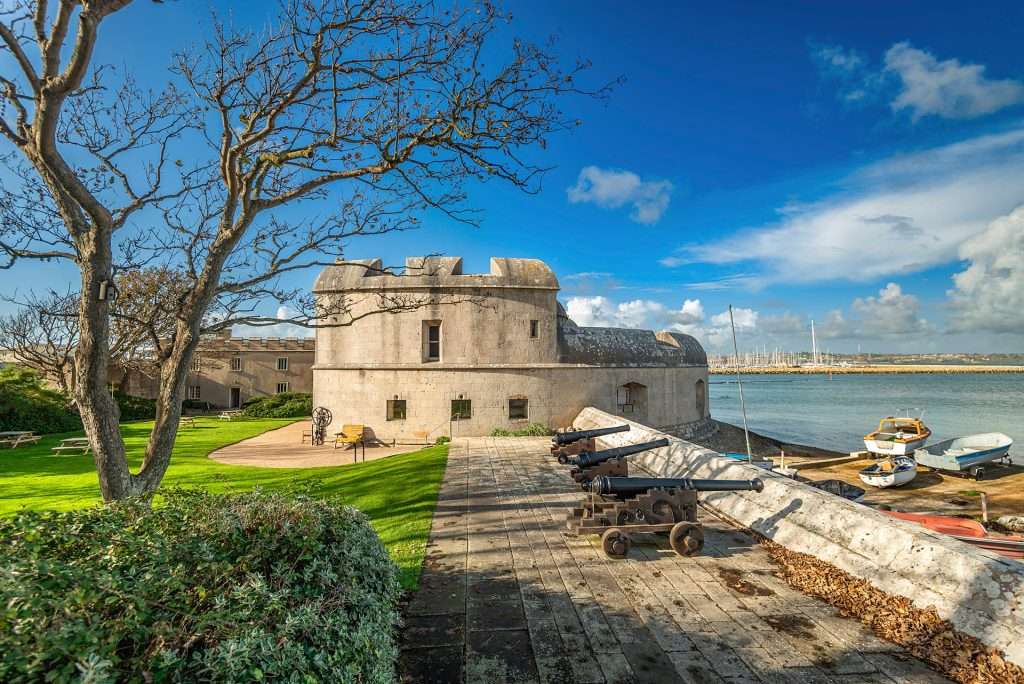
Portland Castle is one of the finest examples of Henry VIII’s coastal forts. Unlike the ruins of Corfe, this is a sturdy, roofed structure designed to defend against French invasion. It is remarkably intact and offers a real sense of Tudor military life.
Local Expert Tip: Don’t miss the Captain’s Garden. It is a peaceful walled garden with views over Portland Harbour that most visitors rush past.
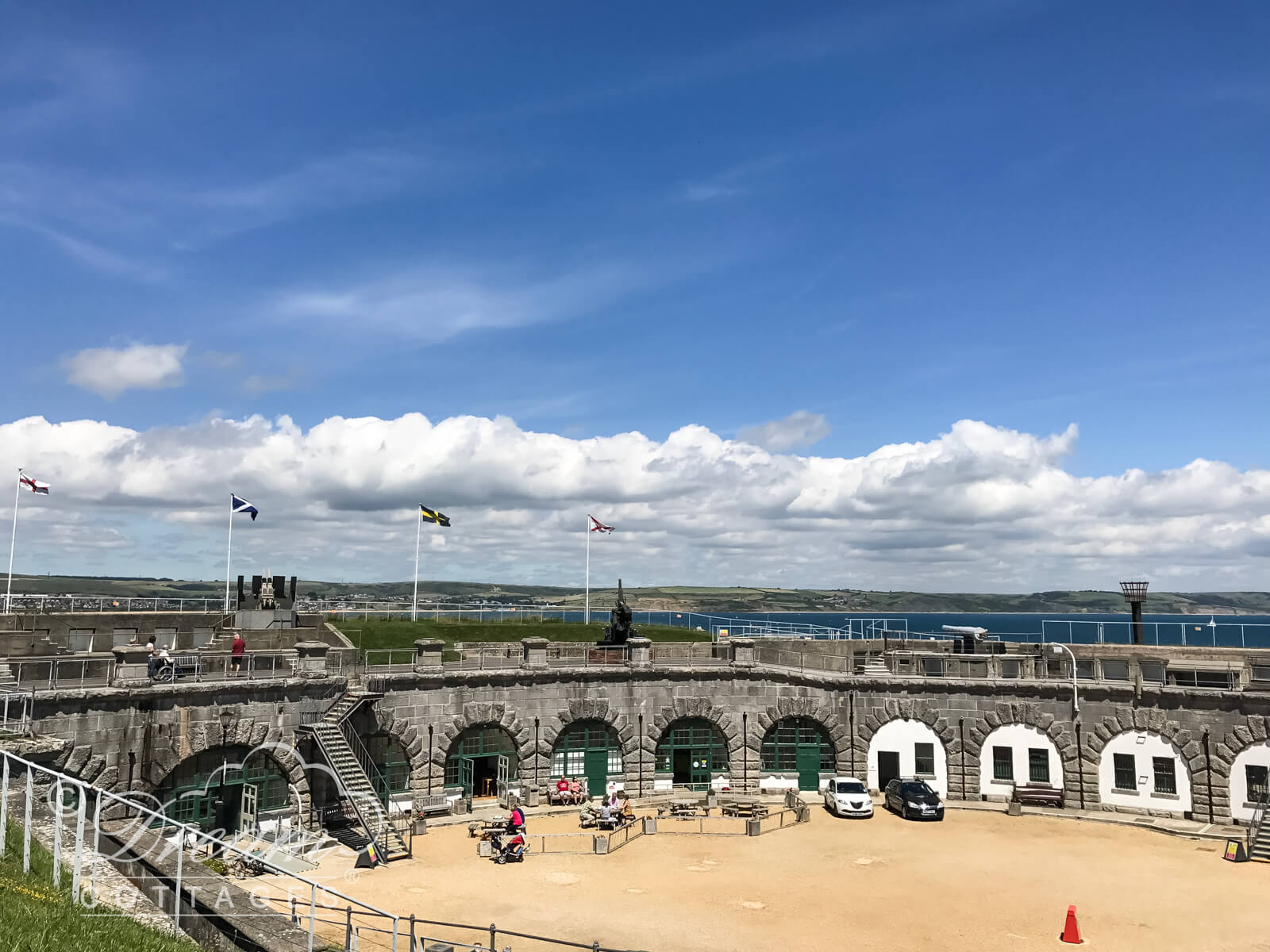
Overlooking Weymouth Harbour, the Nothe Fort is a Victorian coastal defence that was also used heavily during WWII. The labyrinth of underground tunnels and the “Mouse Trail” for kids make it one of the most engaging heritage spots in the county.
Local Expert Tip: The fort cafe serves a fantastic traditional Dorset cream tea. It is a great spot to sit and watch the luxury yachts and fishing boats navigate the harbour entrance.
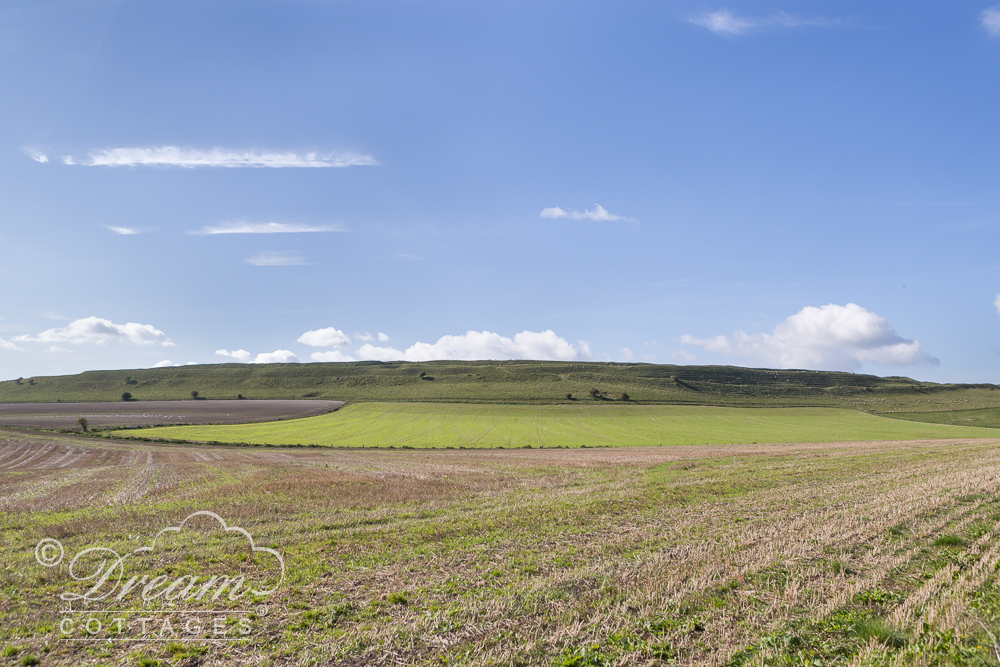
One of the largest and most complex Iron Age hill forts in Europe. The massive, undulating earthworks of Maiden Castle are a testament to pre Roman engineering. Standing in the centre of the fort, you can still feel the scale of the community that lived here thousands of years ago.

Dorset’s museums add depth and context to the Jurassic Coast’s landscapes. These are essential stops for rainy days or for those who want to see the “best bits” of the coast’s fossil record in climate-controlled comfort.
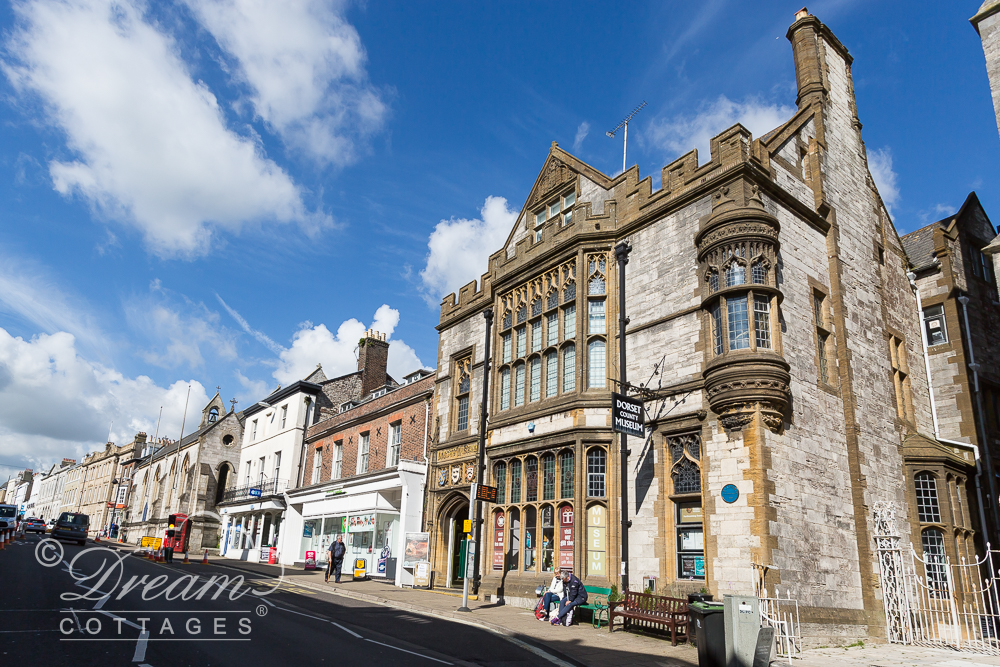
This recently refurbished, award-winning museum is a world-class facility. It houses the finest collection of fossils from the Jurassic Coast, alongside an impressive Thomas Hardy archive and Roman mosaics found right beneath the streets of Dorchester.
Local Expert Tip: The “Diplotomodon” (the first dinosaur remains ever found in the UK) is a highlight here. After your visit, the TASTE Café inside the museum serves some of the best local Dorset produce in the town centre.
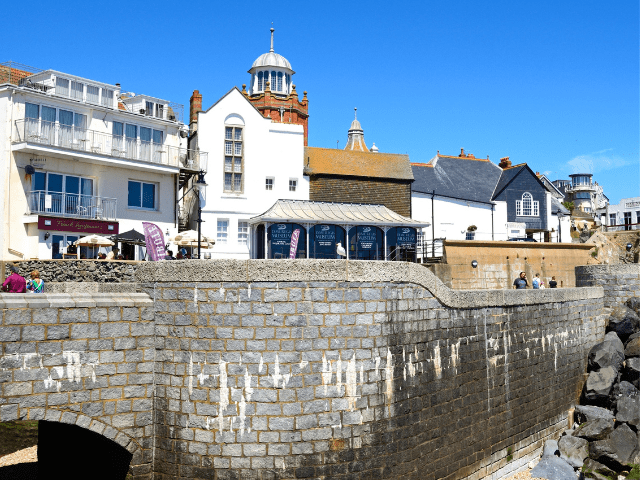
Built on the site of Mary Anning’s birthplace, the Lyme Regis Museum quirky, spiral-shaped museum is packed with maritime history. It is the definitive place to understand how a young Victorian woman changed the way the world views prehistory.
Local Expert Tip: The museum’s “Fossil Walks” are incredibly popular and often sell out weeks in advance. If you plan to go, book your slot the moment you confirm your holiday dates.
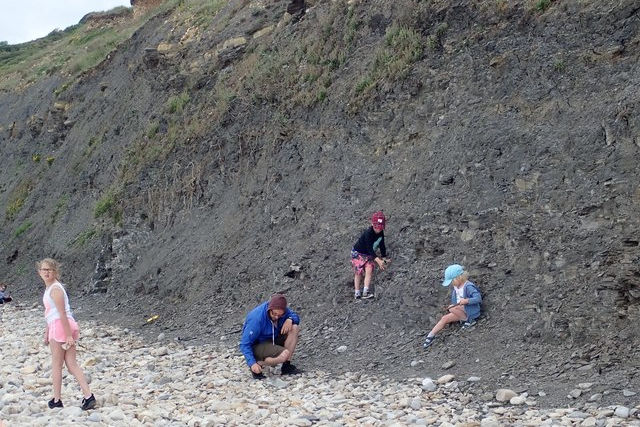
Located on the first floor of a former salt house right on the beach, this centre is the geological “HQ” of the Jurassic Coast. It is an educational charity that houses a spectacular 19-foot Ichthyosaur and provides vital safety information for fossil hunters.
Local Expert Tip: This is the best place to have your beach finds identified. The wardens are incredibly skilled and can tell you exactly what that “strange patterned rock” in your pocket actually is.
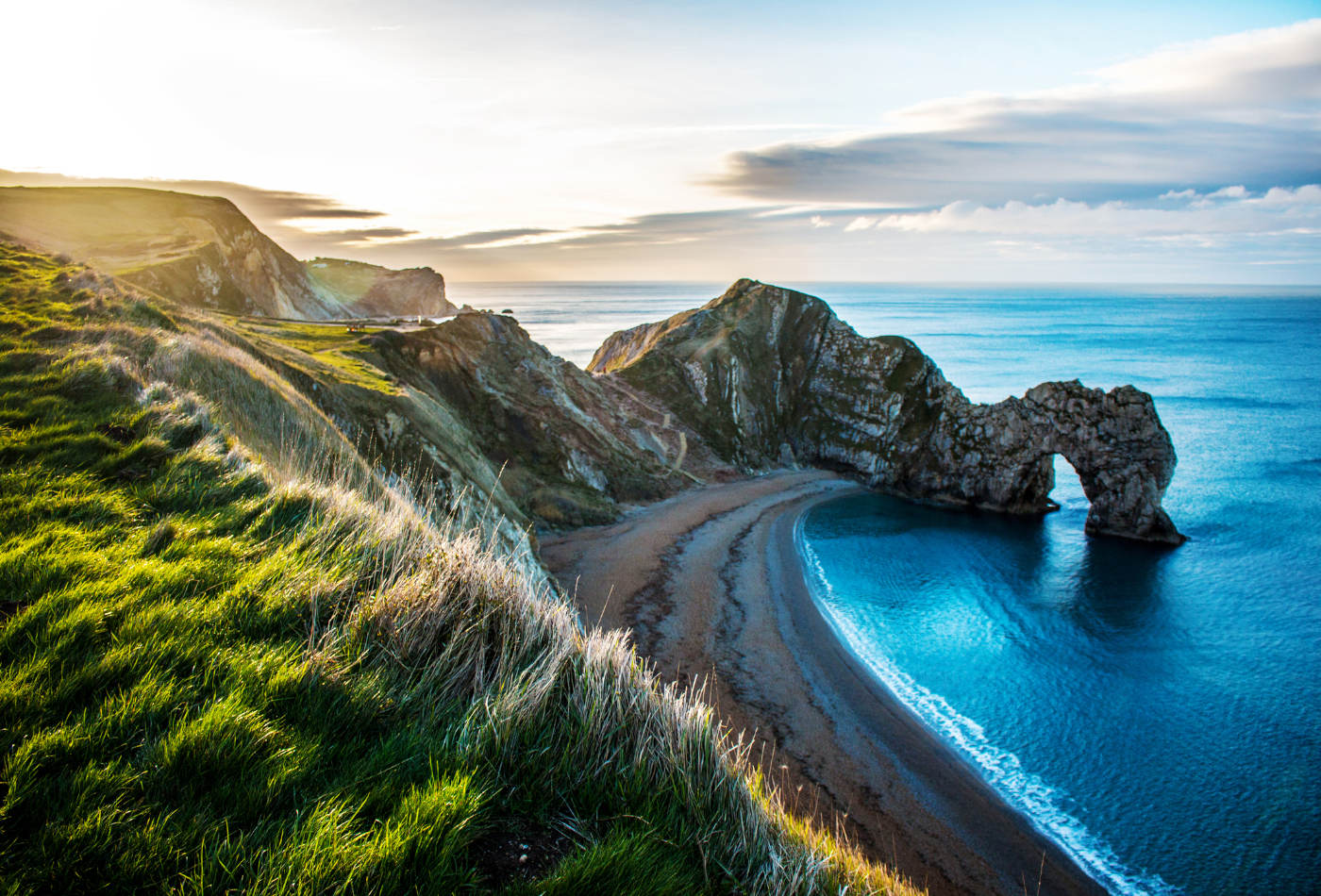
Walking is the only way to truly appreciate the sheer scale of the Jurassic Coast. These paths follow the South West Coast Path, a route originally used by Coastguards to spot smugglers. Today they offer a front row seat to 185 million years of history.

This walk feels like a journey to the edge of the world. As you leave the sandy dunes of Studland, the path climbs onto the chalk ridge. You are walking on a landscape that was once connected to the Isle of Wight. The chalk stacks of Old Harry are the final remains of that lost land bridge.
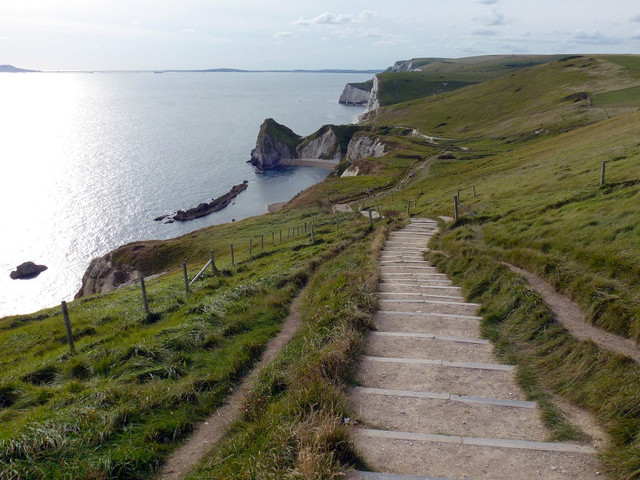
This is the most iconic walk in Dorset. It is a steep path that showcases the dramatic folding of the earth’s crust, known locally as the Lulworth Crumple. You will pass the emerald waters of Stair Hole before reaching Durdle Door, the most famous natural limestone arch in the world.
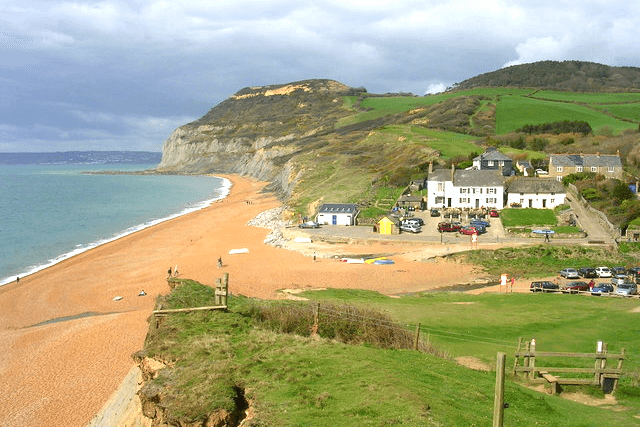
This is a walk for those who enjoy a challenge. Golden Cap is the highest point on the south coast. The summit is capped with golden greensand and the views stretch from Chesil Beach to the red cliffs of Devon. You will also pass the ruins of the 13th century St Gabriel’s Chapel.
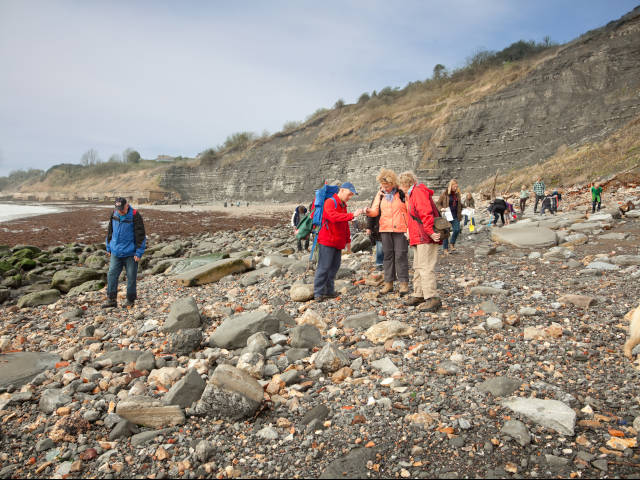
The Jurassic Coast is world famous for fossils, but safety and conservation are essential. The cliffs are inherently unstable, and landslips are common after periods of heavy rain.
While many seaside activities are ruined by a downpour, fossil hunting actually benefits from it. Heavy rain and winter storms wash away the soft clay and mud of the cliffs, revealing “fresh” fossils that have been hidden for millions of years.
Local Expert Tip: The best time to head out is on a falling tide immediately after a storm or a heavy rain shower. This is when you are most likely to find ammonites and belemnites sitting loose on the shingle. However, if the rain is torrential or the wind is gale-force, the professional guides will cancel walks for safety. Always check the Lyme Regis Museum or Charmouth Heritage Coast Centre social media for real-time weather cancellations.
Mary Anning, a pioneering fossil hunter from Lyme Regis, transformed our understanding of prehistoric life. Her legacy can be explored through museums, guided fossil walks, and interpretation panels throughout the town. Even on a rainy day, you can follow in her footsteps by visiting the Mary Anning Wing at the Lyme Regis Museum, which offers sheltered views of the very beaches where she made her greatest discoveries.
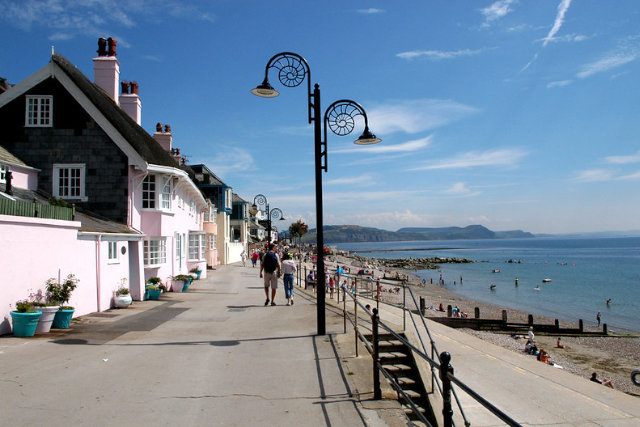
Choosing the right base is key. Corfe Castle is perfect for rural charm, while Weymouth offers the most central access to forts and museums. For those focused on fossil hunting, Lyme Regis or Charmouth are the ideal seaside hubs.
With a wide choice of self-catering cottages, you can find a historic base that suits your own story.
Is the Jurassic Coast really a UNESCO World Heritage Site? Yes, it is England’s only natural World Heritage Site, placing it alongside the Great Barrier Reef and the Grand Canyon.
How long is the Jurassic Coast? It runs for 95 miles from Orcombe Point in East Devon to Old Harry Rocks in Dorset.
Where is it safest to go fossil hunting? Charmouth and Lyme Regis are the best spots because the soft clay cliffs regularly release new fossils onto the beach.
Can I visit Durdle Door in the rain? The path is made of limestone and can become extremely slippery when wet. If it is raining heavily, we recommend visiting Portland Castle or the Dorset Museum instead.
by Laura Bell / Area Guides

Hi I'm Laura Bell and I love staycations! I'm a marketing executive for our South brands and have enjoyed 3 years of writing. I en...
Read More About Author
Sign up to receive exclusive offers, competitions and the latest news to your inbox, and you'll be entered into our monthly prize-draw 3 times!
There’s something undeniably magical about Dorset. With its rolling countryside, honey-coloured cottages, winding lanes and Jurassic Coast vistas, it’s...
Dorset is an area of the UK that has numerous locations and attractions to cater each member of the...
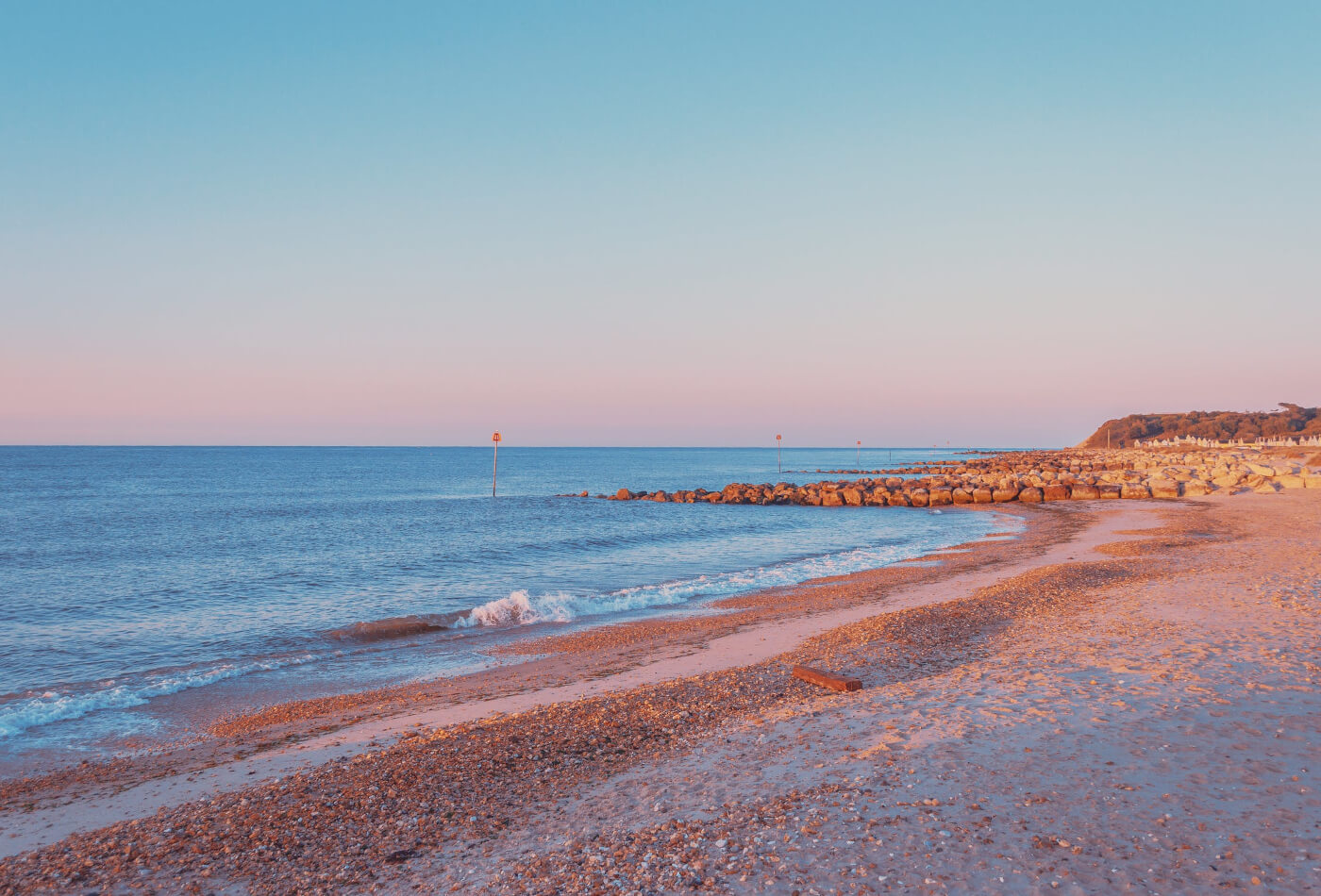
Explore the wild and wonderful Chesil Beach, situated on the stunning Jurassic Coast. With a sprawling coastline of shingle...

