
16 Romantic Things to in Dorset
Dorset is one of the most romantic destinations in the UK. With its Jurassic coastline, rolling countryside and charming...





by Josh Davies / Activities
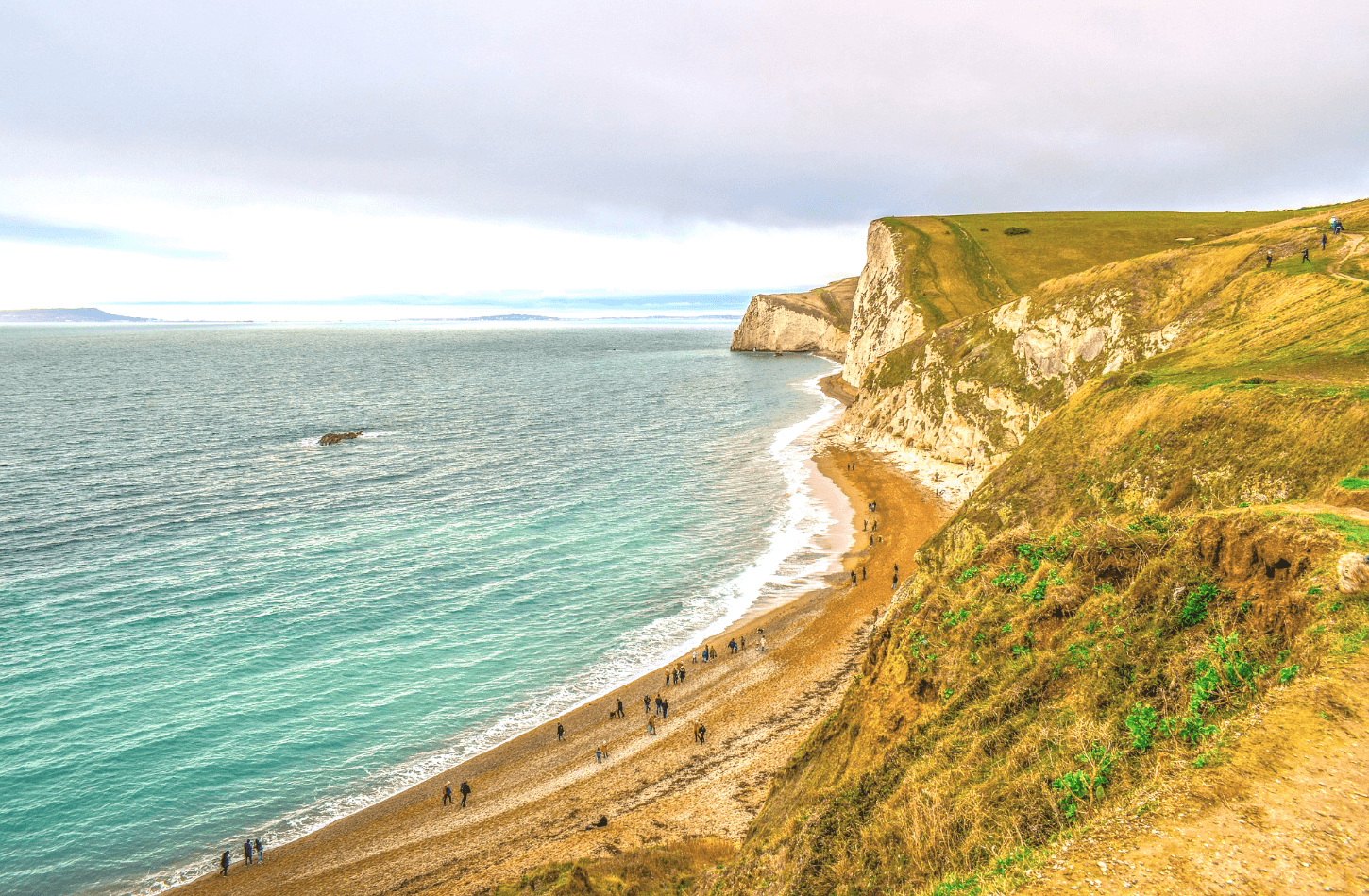
Stretching for 95 miles from Exmouth in East Devon to Studland Bay in Dorset the Jurassic Coast is one of the most fascinating places to explore during a coastal holiday. Recognised as a UNESCO World Heritage Site, this extraordinary stretch of coastline reveals an almost continuous timeline of Earth’s history, spanning around 185 million years.
Thanks to the natural forces of wind, waves and weather, ancient rocks are constantly being eroded, uncovering fossils that have been hidden for millions of years. For guests staying in one of our holiday cottages, fossil hunting is a wonderful way to slow down, explore the shoreline and add a sense of discovery to your Dorset break.
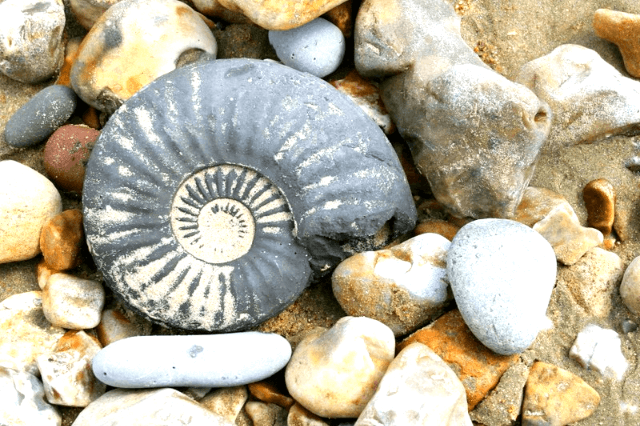
What makes the Jurassic Coast truly unique is the way its cliffs and beaches display rock layers from the Triassic, Jurassic and Cretaceous periods. Each section of the coast tells a different story from a time when this area lay beneath warm, shallow seas filled with marine life.
Over time, the remains of these creatures became fossilised within the rock. Today, erosion releases them naturally, washing them onto beaches and into shingle beds. This means every visit offers the chance to spot something new, whether it is a small shell imprint or a beautifully preserved ammonite.
Yes—but only if you follow specific rules. The Jurassic Coast is a UNESCO World Heritage Site and much of it is protected as a Site of Special Scientific Interest (SSSI). Fossil collecting is allowed, but it’s tightly regulated to protect both people and science.
View this post on Instagram
Do collect loose fossils from the beach
Do follow the Jurassic Coast Fossil Collecting Code
Do check local rules before you go
Do report significant or rare finds
Do stay safe
Do respect land ownership
Don’t hammer, dig, or excavate cliffs
Don’t use tools on protected sites
Don’t trespass
Don’t remove large quantities
Don’t sell fossils without checking legality
Don’t damage the environment
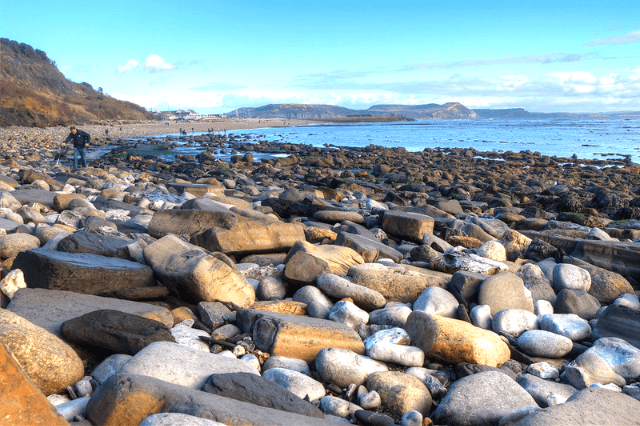
While fossils can be found along much of the Jurassic Coast, there are a few well known locations that are particularly popular with visitors.
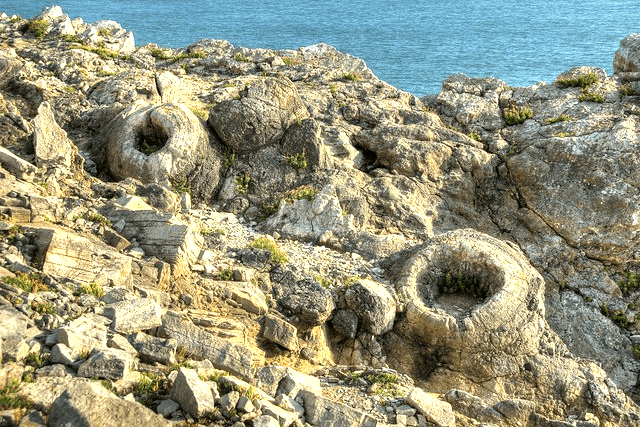
One of the joys of fossil hunting along the Jurassic Coast is that you do not need expert knowledge to enjoy it. Even first time fossil hunters have a good chance of finding something interesting.
Common finds include:
Occasionally, fragments of bone from marine reptiles such as ichthyosaurs or plesiosaurs are discovered. If you think you have found something unusual or important, local museums and visitor centres can offer advice.
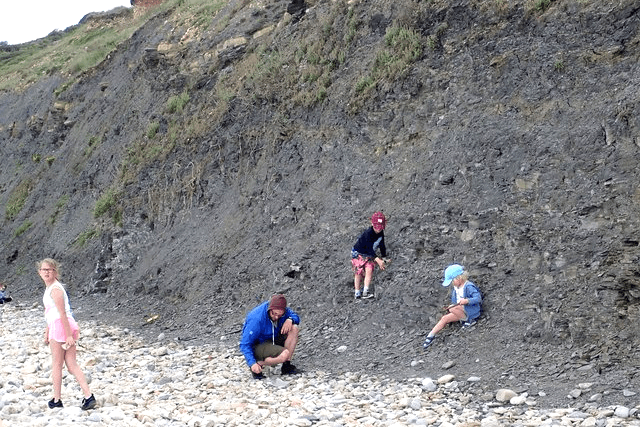
There are several Jurassic coast fossil walks available. However, the Charmouth Fossil Walk is one of the most popular. The walk covers a distance of one mile and takes place along the beach among pebbles and boulders.
Let the experts guide you through Dorset’s rich history as you take a walk along the stunning coastline. The Wardens are full of information and will give you the best tips on spotting fossils in Charmouth.
Starting at the Charmouth Heritage Coast Centre meeting point, the Jurassic coast walk takes you down to the famous beach and onto your Jurassic Coast Walk. Throughout busier months, it is advisable to book in advance. You should arrive 10 minutes before the walk to pick your tickets.
Whether fossil hunting or not, there are a number of stunning Jurassic Coast walks to discover.
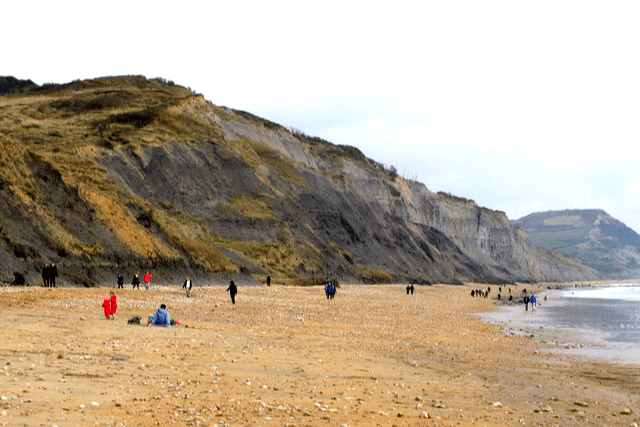
A little planning can greatly improve your chances of success. Low tide is the best time to explore, especially on beaches with rocky platforms. Tide times vary daily, so it is always worth checking before you set out.
Many experienced fossil hunters also visit after storms or periods of rough seas, as erosion often exposes fresh material. Early mornings can be particularly rewarding, before the beaches become busier.
While winter and early spring are often considered prime seasons, fossil hunting can be enjoyed throughout the year when conditions are right.
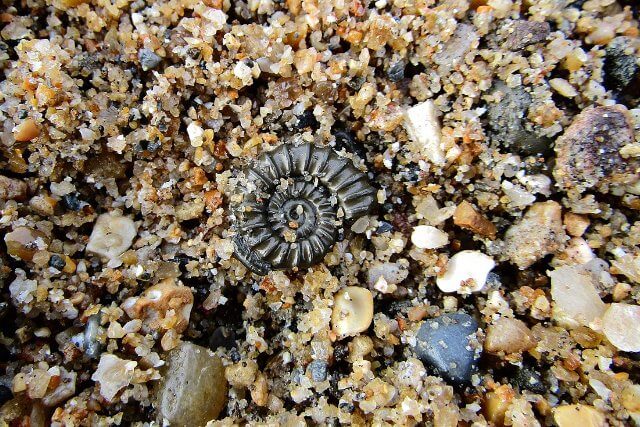
You do not need specialist equipment to enjoy fossil hunting, but a few simple tips can make your visit more enjoyable.
Many local museums are happy to help identify fossils and share more about the history behind your discoveries.
The Jurassic Coast is a beautiful and ever changing environment, so safety should always come first.
Cliffs can be unstable, and rockfalls may occur without warning. Always keep a safe distance from cliff edges and bases, and never attempt to climb or dig into them.
Checking tide times is essential, as some sections of beach can be cut off quickly by rising water. Pay attention to warning signs and keep children close when exploring rocky areas.
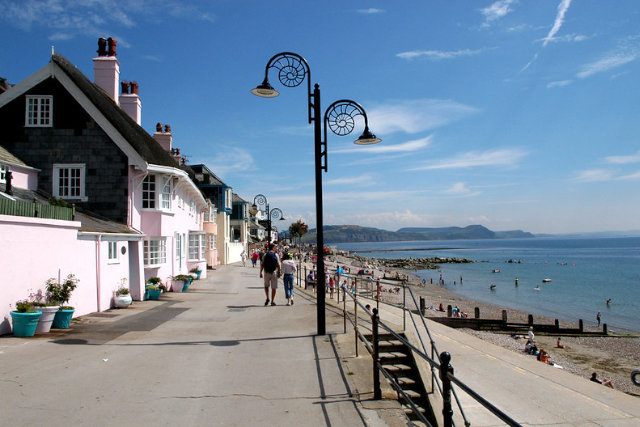
Fossil hunting along the Jurassic Coast is encouraged when done responsibly. The general guidance is to collect only loose fossils found on the beach and to leave anything embedded in cliffs or large rock formations.
The coastline is protected for its natural and scientific importance. If you discover something rare or significant, reporting it to a local museum helps ensure it can be recorded for future study.
Fossil hunting fits perfectly into a Dorset holiday. After a morning on the beach, you can enjoy coastal paths, local cafés and traditional seaside towns. Staying nearby makes it easier to plan around tides and weather, giving you the best chance of a rewarding experience.
Whether you return home with a pocket full of fossils or simply a greater appreciation of the landscape, fossil hunting along the Jurassic Coast is a memorable way to connect with Dorset’s natural history. It is an experience that feels both relaxing and inspiring, and one that adds something truly special to a coastal escape in 2025.
If you love the idea of fossil hunting in Dorset, why not check out the Lyme Regis fossil and earth science festival this year. You can find out more about all the festivals in Dorset and when they are throughout the year.
With a stunning choice of beaches and a rich history of dinosaurs, Jurassic coast fossil hunting is a perfect way to explore Dorset. Leave your Jurassic coast cottage behind and go on an adventure through time with the family.
Charmouth Beach is hands-down one of the best places on the Jurassic Coast for beginners.
First-hand insight: Many first-time hunters strike gold within 20–30 minutes here simply by slowing down and scanning the high tide line. Locals often say the best finds come from looking, not digging.
Charmouth
Lyme Regis
Walking routes
First-hand insight: Arriving early (before 9am) avoids crowds and means you’re first to fresh material washed out overnight.
Storms and heavy rain are your best friend—but only after conditions settle.
Most productive after storms:
Why?
First-hand insight: Seasoned collectors often head out the morning after a storm, once tides are safe. The sweet spot is usually within 24–48 hours.
Never hunt during storms or high winds—cliff collapses are common.
If you’re unsure what you’ve found, you’ve got great local options:
Charmouth Heritage Coast Centre
Lyme Regis Museum
First-hand insight: Even common finds are worth getting checked—what looks “ordinary” to a beginner can sometimes be a well-preserved or unusual specimen.
No and beginners are often more successful without them.
First-hand insight: Collectors often say their best finds came from simply crouching down and following the line of freshly washed stones near the tide mark.
Low tide is essential, always check tide tables first. Early morning is ideal for:
First-hand insight: Many regulars plan their walks so they’re turning back as the tide starts to rise, not racing it.
Common and exciting beginner finds include:
Complete, museum-quality specimens are rare but, finding your first identifiable fossil is very achievable.
Image Credits – David Hagwood – (CC BY-SA 2.0); Julian Dowse – (CC BY-SA 2.0); Anne Roberts – (CC BY-NC-SA); Matthew Anderson – (CC BY-SA 2.0); Eirian Evans – (CC BY-SA 2.0)
Updated for 2026 with the latest guidance on fossil hunting locations and safety along the Jurassic Coast.
by Josh Davies / Activities

Hi, I'm Josh. I joined the Sykes team in 2019 and love all things travel. I enjoy spending my time travelling throughout the w...
Read More About Author
Sign up to receive exclusive offers, competitions and the latest news to your inbox, and you'll be entered into our monthly prize-draw 3 times!

Dorset is one of the most romantic destinations in the UK. With its Jurassic coastline, rolling countryside and charming...
Rain doesn’t have to spoil your Dorset adventure. In fact, it’s the perfect excuse to explore the county’s amazing...
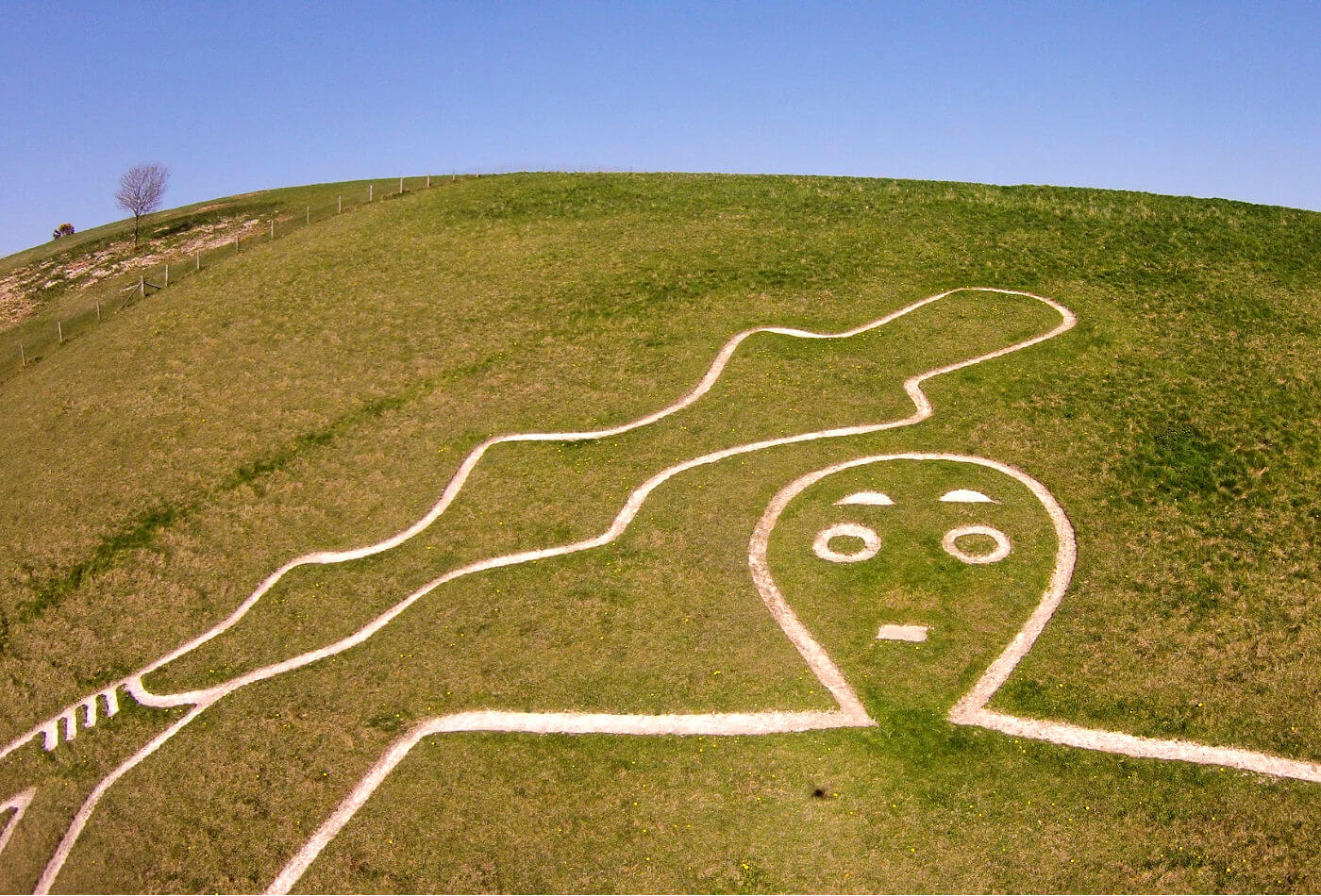
Walk among the legends of old and discover more about the Cerne Abbas Giant. With fertility dances one-meter deep...

